
How Personalisation in Marketing Helps Online Casinos Understand Players Better
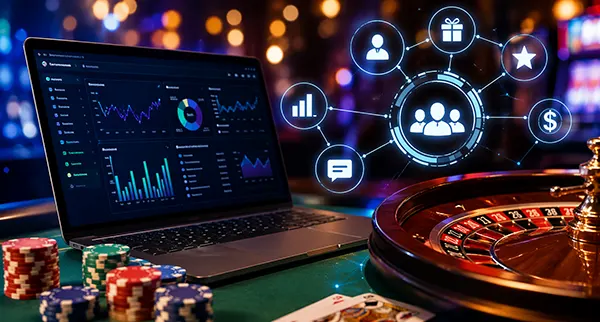
Personalisation has moved from a simple marketing tactic to a core tool that shapes how online casinos interact with their audience. By analysing player behaviour, preferences, and activity patterns, operators can move beyond generic offers and build experiences that feel relevant and timely. This approach is not about aggressive promotion but about understanding how players engage, what motivates them, and where friction appears in their journey.
Data as the Foundation of Player Understanding
Modern online casinos rely on behavioural data collected through gameplay, session duration, deposit patterns, and game preferences. This information allows operators to identify trends, such as which games attract repeat visits or when players are most active. Various online casinos, including NolimitWay, demonstrate how a well-structured game catalogue and clear segmentation can support this approach by aligning content with player expectations.
Segmentation plays a key role in this process. Players are grouped based on shared characteristics: casual users, high-frequency players, or those who prefer live games. Each segment responds differently to communication, and personalisation ensures that messages are aligned with these differences rather than sent broadly to everyone.
At the same time, responsible data handling is essential. Regulations such as GDPR require transparency and consent, meaning casinos must balance personalisation with privacy. Trust becomes part of the experience, and misuse of data can quickly undermine long-term engagement.
How Algorithms Turn Data into Action
Machine learning models analyse player behaviour in real time, adjusting recommendations based on recent activity. For example, if a user shifts from slots to table games, the system adapts instantly, offering relevant suggestions without delay.
These systems also detect patterns that are not immediately visible to humans. Predictive analytics can estimate the likelihood of churn or identify moments when a player might disengage. This allows operators to intervene with appropriate content rather than generic incentives.
Importantly, automation does not replace human oversight. Marketing teams define boundaries, ensuring that communication remains appropriate and avoids excessive pressure, especially in contexts related to responsible gambling.

Personalised Communication and Player Experience
Emails, push notifications, and in-site messages are now tailored to individual behaviour. Instead of mass campaigns, players receive updates based on their activity, preferred games, and timing. This increases relevance and reduces the risk of messages being ignored.
Game recommendations are another practical application. By analysing previous sessions, casinos can suggest titles with similar mechanics or themes. This helps players discover new content without overwhelming them with irrelevant options.
Bonuses are also adapted. Rather than offering identical promotions to all users, operators adjust rewards based on engagement levels and preferences. This creates a more balanced approach, where incentives support user experience instead of dominating it.
Balancing Engagement with Responsibility
Effective personalisation includes safeguards. Systems can identify unusual behaviour, such as rapid spending or extended sessions, and trigger responsible gaming messages. This shifts personalisation from purely commercial goals to player protection.
Transparency is another critical factor. Players should understand why they receive certain offers or recommendations. Clear communication builds confidence and reduces scepticism toward automated decisions.
In practice, the most sustainable strategies are those that prioritise long-term relationships. Personalisation works best when it helps users navigate the environment comfortably, rather than pushing them toward constant activity. This balance defines how modern online casinos approach marketing in 2026.